
Why Investment Tips Fall Short … and What to Do Instead
Much of what passes for financial wisdom is built on speculation, short-term thinking, and hype. Stock-picking, market timing, and economic forecasts might make for engaging headlines, but they don’t hold up under scrutiny.
The reality? An evidence-based, disciplined approach to investing is far more effective.
Let’s have a look at some mainstream investment advice you might be hearing people talk about or maybe some investment rules-of-thumb that are not likely to pan out for you, if you follow them…
- Market Timing – The concept of buy low & sell high is a simple one to talk about, but a much more challenging one to execute. Research shows that market timing is a losing game. Studies from Dimensional Fund Advisors (DFA) reveal that missing just a handful of the market’s best days can significantly reduce long-term returns. Those best days often happen during periods of heightened market volatility, making them impossible to predict.
- Stock Picking/Concentrated Investing – Many investors (and even professional fund managers) believe they can consistently pick the winning stocks and avoid the losers. Yet, year after year, the SPIVA scorecard confirms that most actively managed funds fail to outperform their benchmarks. Even those that succeed one year rarely repeat their performance. Broad diversification through low-cost, evidence-based investment strategies removes the guesswork and improves long-term outcomes.
- Economic Forecast/Reacting to Political/Geopolitical Events – The challenge is that a crisis is always unfolding somewhere, and its outcome remains uncertain until it fully plays out. The most impactful financial risks are the ones that catch you off guard. A review by CXO Advisory Group found that financial experts’ predictions were no better than chance. The best way to safeguard your wealth in any crisis is to build and sustain a resilient, globally diversified portfolio.
- Focusing on Yield vs. Total Return – It’s critical to proceed with caution when choosing to focus on the current income an investment generates (commonly referred to as yield), as historically this strategy resulted in underperforming the broad stock market on pre-tax and even more so on after-tax basis. We’ll explore this more in this blog, but in the meantime, have a look at Dimensional’s article.
- Excitement Over Alternative Investments – Alternative investments like private debt, private real estate, and private equity are much hyped but that excitement over getting on board, results in overlooking some major risks of this investment strategy: high hidden costs, lack of transparency, complexity, and potential lack of liquidity, just to name a few.
- Herd Instinct – Too often, investors want to jump in without looking. They follow the heard without doing the proper research and don’t fully understand what they are investing in and the risks and ramifications. Clearly, due diligence is advised to reduce your risk.
- DIY Investing/Overconfidence in Knowledge/Abilities – DIY investors are prone to overconfidence bias. Those who manage their own investments, are more likely to believe they can achieve better results than a professional financial advisor. However, this confidence can lead to biased decisions that may seem wise in the moment but often result in underperformance.
- Financial Advisor or Facilitator? – As much as it is great to go to a financial advisor with a great investment idea, be wary of a financial advisor who is a “yes man” and will just follow your instructions. It is not their job to facilitate poor investment judgements. Welcome their expertise – that’s why they are your financial advisor after all.
A Smarter Way to Invest
The financial industry thrives on noise, but smart investors block it out. Here’s what actually works:
- Stay Invested – Avoid the temptation to time the market.
- Diversify Wisely – Reduce risk with a broad, evidence-based portfolio.
- Ignore Predictions – Focus on what you can control: costs, discipline, and time in the market.
By rejecting investment advice noise and embracing an evidence-based approach, you give yourself the best chance at financial success. The goal isn’t to chase trends—it’s to build lasting wealth through smart, steady investing.
The Truth about Enhanced Income Strategies & the Dangers of Overlooking a Total Return Strategy
One popular enhanced income strategy is to use an option overlay to generate income while maintaining significant exposure to the underlying stock market, or a group of individual stocks. Income is typically generated through covered call writing strategies.
People think higher yield = high return, however in practice, that is usually not the case.
A few things to understand about enhanced income strategies in general:
- They are very popular, with huge growth in assets and number of funds over the past few years
- In the US, where we have data, these strategies significantly underperformed the broad market, measured by the S&P 500 over the past 10 years
- These strategies have also underperformed a balanced 60/40 strategy over the past 10 years, even those these strategies had 40% more stock exposure, i.e. 100%!
- They are less tax efficient due to higher, fully taxable yearly distributions
Please note, while I would not recommend either of the two following specific ETFs, looking at live strategies, with real money, fees, and transaction costs allows me to illuminate my point.
BMO manages two separate ETFs which have the same underlying holdings and the same investment manager. The difference is that one of these ETFs had a mandate of enhancing the current income by using covered call overlay, whereas the other one did not, i.e. was focused on total return of the underlying holdings. Needless to say, this makes for an interesting comparison of enhanced income versus a total return approach.
Have a look at the results over the past 10 years:
1) Total Return: ZEB – BMO Equal Weight Banks Index ETF
- Equal weighting of Canada’s largest 6 banks
- 3.89%* current yield
- MER 0.25%*
- 10-year return: 10.26%*
2) Enhanced Income: ZWB – BMO Covered Call Canadian Banks ETF
- Equal weighting of Canada’s largest 6 banks, with a covered call option overlay
- 6.5%* current yield
- MER 0.71%*
- 10-year return: 7.83%*
*As of December 31, 2024.
Comparing these two strategies, the results are striking. Focusing on the enhanced income resulted in the following over the past 10 years:
- 2.43% per year in lower performance
- 0.46% per year in higher fees
- Less tax efficient due to higher year taxable distributions
- Over 20% less wealth after 10 years (assuming all distributions were re-invested)
Real Life Investment Strategy in Action: Total Return vs. Income Focus
So, let’s have a look at a real-life example of how focusing on income/yield vs total return can drastically change long-term wealth accumulation.
Please note: As above, I would not recommend a concentrated investment because of increased risk, but I’d like you to see how this plays out, for illustration purposes.

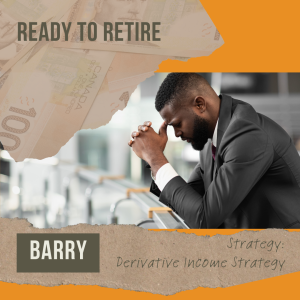 Introducing Maurice & Barry – you might remember them from my previous blogs. Well, Maurice and Barry have now reached retirement, and both retire on the day they turn 65 years old.
They have other similarities:
- Planning horizon – age 94 (29 years)
- $1 million to invest, currently in a taxable account – no RRSPs or TFSAs
- Full CPP and old age security entitlement
- Need $75k year in addition to government benefits, indexed to 2% per year inflation
Now, here’s where Maurice and Barry diverge, which will result in very different wealth outcomes:
- Maurice wants to focus on a Total Return approach to his investments. So, he invests his $1 million in a hypothetic investment, with a 7% per year expected return and 100% of the yearly return is deferred capital gains (i.e. only taxable when he sells holdings to meet his lifestyle needs).
- Barry decides to focus on Income/Yield. So, he invests his $1 million in different hypothetic investment, with 7% current yield. However, 100% of yearly return is fully taxable income. Barry’s current income matches his lifestyle needs, however all the income he receives each year is fully taxable.
For illustration purposes, we will ignore sequence of returns and assume both Barry and Maurice earn 7% per year over their respective planning horizons (to age 94).
Let’s look at the results:
| Factor | Barry | Maurice | Difference (Maurice’s Advantage) |
| Goal Progress | 100% | 129% | +29% ahead of plan |
| Lifetime Personal Tax | $383,353 | $172,225 | $211,128 less tax |
| Financial Assets @ age 94 | $6,491 | $1,153,199 | $1,146,708 more wealth |
| Tax on Estate | $0 | $301,679 | $301, 679 more in taxes owing |
| Estate Value After Tax | $6,491 | $851,519 | $845,028 more wealth |
Note: Results from SNAP Projections planning software.
- They both meet their needs over their planning horizon (age 94) – Barry meets 100% of needs (just barely) – so if he lives to age 95, he’s in got a financial predicament as he is out of money. On the other hand, Maurice’s approach means he meets his needs over the same 29-year planning horizon but is 29% ahead of plan. So, by age 94, Maurice has $1.1 million wealth accumulated.
- Maurice has paid significantly less yearly personal tax on his investment returns. However, Maurice’s estate would have significantly more tax to pay than Barry, given the accumulated wealth. But, more importantly, even after tax, Maurice’s estate has $845k more wealth.
- Maurice would have the flexibility to increase his yearly lifestyle needs.
- Maurice’s plan allows for more flexibility for unforeseen events.
Invest Smarter, Not Louder
The financial world is filled with noise—hot stock tips, market predictions, and complex strategies promising high returns. However, as we’ve seen, blindly following investment trends—whether it’s market timing, stock picking, or in this example, a purely income-focused investment strategy—can significantly reduce long-term gains. A total return approach, supported by diversification and tax efficiency, offers a more reliable path to financial security.
By focusing on what truly matters—staying invested, minimizing costs, and maintaining a long-term perspective—you give yourself the best chance to achieve financial success. The goal isn’t just to generate income today, but to build lasting wealth that supports your future needs.
Don’t let the noise dictate your strategy. Instead, embrace a smarter, more resilient approach to investing—one that helps you achieve both financial freedom and peace of mind.
If you are considering an investment strategy that focuses on yield or current income, I’d love to talk to you about how it could impact your wealth. Reach out today.