
Why Does the Stock Market Rise When the News Looks Bad?
Short answer: stock prices reflect what investors expect to happen in the future, not what the headlines are reporting today. Markets…

Short answer: stock prices reflect what investors expect to happen in the future, not what the headlines are reporting today. Markets…

Canada is in the midst of a historic intergenerational wealth transfer, with over $1 trillion expected to pass from baby boomers to younger generations. For many families, the question isn’t just how much wealth to transfer but when and how to do so responsibly. Should you give small, incremental gifts during your lifetime or leave a traditional large estate inheritance? Each approach has its merits, but both require careful planning to avoid unintended consequences like fostering dependency or jeopardizing your own financial security. This blog introduces these two contrasting wealth transfer strategies for wealth transfer strategies. Along the way, we’ll explore how these approaches can be tailored to align with your goals while leveraging Canada’s tax rules and financial tools.

A common refrain in investing is that news and expectations are already "priced in”. I often say this publicly and in individual client meetings. When clients are concerned about changes in the market and want to act on what they are hearing, I remind them that the market is ahead of the media rumblings and that snap financial decisions tend to sabotage positive financial outcomes. So, it is much better to hold firm with your investment strategy, that should be based on a sound financial plan, rather than reactively sell, because those who react are most likely reacting too late. And I’m not just guessing. I’m advising based on my experience and deep understanding of how markets work. The reality is that those who stay disciplined see much better performance than those who try to bet on market mispricing and make changes.

Why Investment Tips Fall Short … and What to Do Instead Much of what passes for financial wisdom is built on speculation, short-term thinking, and hype. Stock-picking, market timing, and economic forecasts might make for engaging headlines, but they don’t hold up under scrutiny. The reality? An evidence-based, disciplined approach to investing is far more effective. Let’s have a look at some mainstream investment advice you might be hearing people talk about or maybe some investment rules-of-thumb that are not likely to pan out for you, if you follow them…

A key concern many investors have at the moment is the impact of Trump's tariffs on goods produced outside the U.S. on the markets. I'm hearing from those wondering if they should sell quickly to protect their wealth; their primary question is: What should I do with my investments? My answer (as it usually is when investors are concerned about the geopolitical impact on the markets): Stick with the plan because, by the time you become concerned, the markets have already pre-adjusted (i.e. it's priced in), so any reaction you take is too late.

2025 is Coming… It’s Time to Revisit 2024’s Wealth Management Principles Another year has come and gone. As we bid farewell to 2024 and welcome 2025, it’s the perfect time to reflect, set new goals, and plan ahead. Stay committed to your long-term financial planning and wealth management journey. In 2024, I introduced you to Suzie & Trevor Hall (Accumulators), Jim & Carol Oates (Almost Ready to Retire), and Fred & Ginger Loggins (Accumulator Business Owners). Their situations allowed me to highlight the decisions real people, just like you, are making as they navigate their wealth management planning. So, before 2024 comes to a close, let’s take a moment to reflect on some of the long-term financial planning principles we spotlighted this year…

The Pitfalls of Fanatically Following the Stock Hype It seems to me that the central tenant of the financial media (group-think central) is to glorify stocks or sectors that have experienced recent outsized returns. The hype of cult stocks extends and is amplified by social media channels and its various influencers. Ask any reputable financial economist about these past monumental gains and they will indicate that “past performance is not indicative of future returns”. Despite the restrained advice of these financial experts, it’s easy to get swept up in the hype surrounding these popular stocks and investment trends. Some choose to surrender to FOMO (fear-of-missing-out) and follow these financial fads. for the chance of scoring a big financial win with a little excitement on the side. While these stocks may seemingly promise rapid growth, there are some obvious (and not-so-obvious) risks of chasing high-flying stocks. It’s important to consider the other option: a more thoughtful, measured investment plan. Maybe not as thrilling, but certainly a better path to reaching your long-term financial goals. Let’s explore some examples of how some stocks can achieve a cult-like following and a take realistic look at how they could play out for some real-life investors.

Steps to Retire the Way You Want: Set Your Retirement Goals, Put Your Money in the Right Places, and Optimize Your Withdrawals Most of us feel young well into our 60s (or even later) and retirement seems like a far away concern for the distant future. However, thinking about your retirement early allows you to comfortably enjoy your later years no matter what your priorities are – leaving a legacy for your loved ones, travelling, spending time on hobbies close to home or any combination. Putting together a retirement income plan early gives you the best path to safeguard your financial freedom post-retirement. Retirement income planning doesn’t mean constant worrying and going without today. It just means taking stock of where you are financially, where you want to be in the future, and setting up a plan to get there. That retirement plan could include setting up the right investment strategies now to allow you the flexibility you’ll need in the future to generate cashflow from the right places and pay the least amount of tax. It also could mean contributing regularly and consistently now so you don’t have to make up for lost ground in the future. Let’s get into what retirement investment vehicles and strategies you have, how to think about your retirement priorities and goals, and how you can plan a decumulation strategy for the retirement you want and deserve...
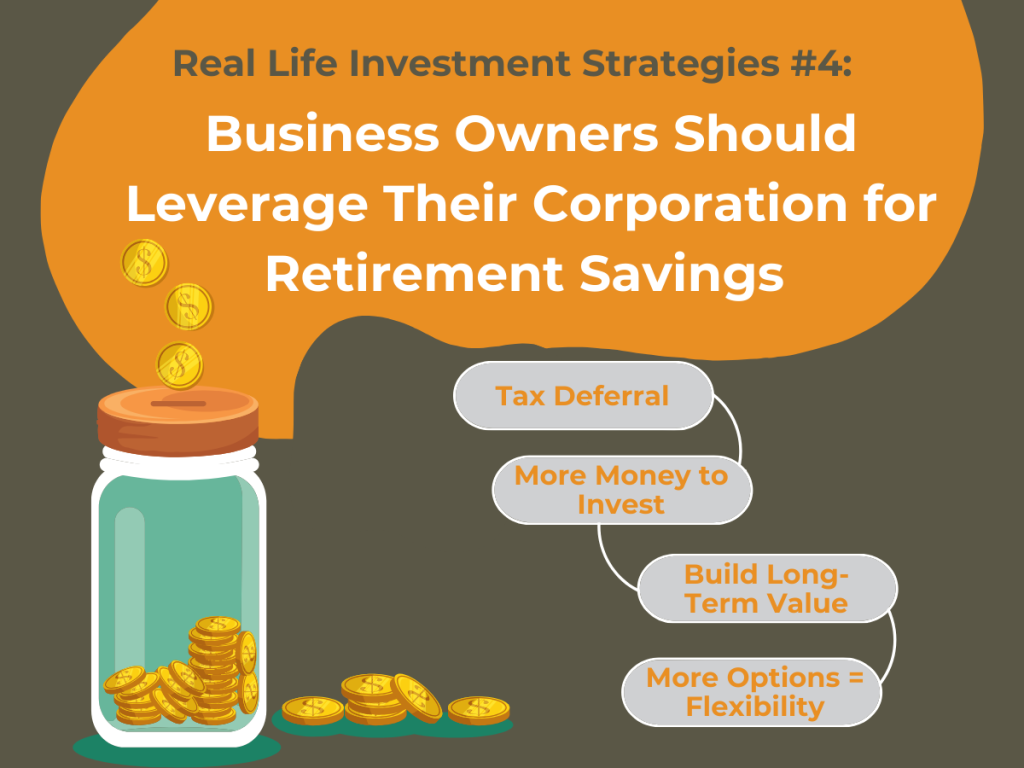
When you're immersed in running a business, thoughts of saving for retirement often take a backseat, Employees in the corporate world may rely on employer pensions, but as a business owner, the responsibility for your retirement falls squarely on your shoulders. Starting your retirement planning early and consistently contributing allows you to benefit from compounding returns to steadily build your nest egg over time. Investing in your retirement can ensure you have the financial means to enjoy life post-retirement, whether it's traveling, pursuing new passions, passing along a little financial freedom to family members, and more. The best advice I can give you is to step back and view these tax changes versus your long-term financial goals, and to avoid making hasty decisions. If there is major tax reform in the next few years, many individuals might find their hasty planning decisions to be very costly. Even with higher capital gains inclusion rates, investing in your corporation still has many advantages. After reading about the ins-and-outs of using your corporation optimally as a savings and withdrawal vehicle, let’s see it all in action with business owners like you…

Both Emergency Fund and Lifestyle Reserve Planning are Crucial Whether You are Accumulating Wealth or Getting Ready to Retire Having an emergency fund is common advice, whether you are reading this in the financial media or hearing it from a financial advisor. Many people who are later in life and feeling comfortable with their financial situation might disregard this advice, assuming it only applies to those that don’t have as much financial stability. The truth is that an Emergency Fund is something that everyone (even you!) should have. In addition, the added financial security planning of a Lifestyle Reserve should also be part of your financial plan. So, let’s explore exactly what an Emergency Fund is, how a Lifestyle Fund is different, and why both should be in place to ensure long-term financial alternatives and adaptability. Most importantly, I’ll highlight how this applies to Suzie & Trevor Hall (The Accumulators) and Jim & Carol Oates (Almost Ready to be Retirees), so you can see how it can work for you.